
This article is part of our complete guide to insurance in India. While life insurance protects your family from losing your income, health insurance protects your savings from medical bills — a different job, and an equally essential one.
The Core Idea
Health insurance exists to do one thing: stop a medical bill from becoming a financial disaster. It pays for hospitalisation and treatment costs so that an illness or accident drains a policy instead of your savings. That distinction matters, because while life insurance protects your family if your income stops, health insurance protects your wealth while you’re very much alive — and in India, where most medical costs are still paid straight out of pocket, that protection is one of the most important financial decisions a household makes.
This article covers the foundations: why health cover matters more than ever, the main types available, the key terms you must understand before buying, and who genuinely needs it (almost everyone). The finer mechanics of picking the right policy — room limits, co-pay, sub-limits, claim settlement — get their own detailed treatment in how to choose health insurance. This is education, not a recommendation.
Life insurance protects your family from losing you. Health insurance protects your savings from a hospital bill while you’re still here.
Why It Matters
Why health insurance matters more than ever
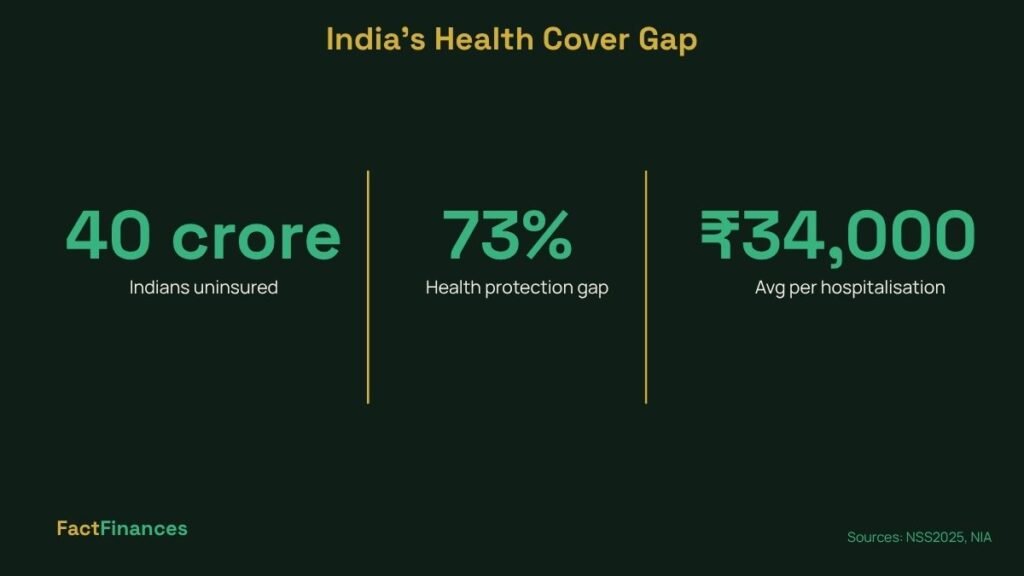
Medical costs in India have been climbing faster than general prices for years, and private healthcare — where most hospitalisations now happen — is expensive. The 2025 National Sample Survey put the average out-of-pocket cost of a single hospitalisation at around ₹34,000, rising to over ₹50,000 in private hospitals. A serious surgery, an ICU stay, or a course of cancer treatment runs into several lakhs.
Yet protection remains thin. Around 40 crore Indians have no health cover at all, the country’s health protection gap sits near 73%, and roughly 39% of all health spending still comes directly out of patients’ pockets. The result is predictable and well-documented: medical bills are one of the leading causes of families sliding into debt or poverty, as we cover in the real cost of being uninsured. Health insurance is what stands between a sudden hospitalisation and your savings — converting an unpredictable, potentially ruinous cost into a manageable annual premium.
The Types
The main types of health insurance
Health insurance isn’t one product but a family of them, each suited to a different need. The main ones to know:
| Type | What it does | Best for |
|---|---|---|
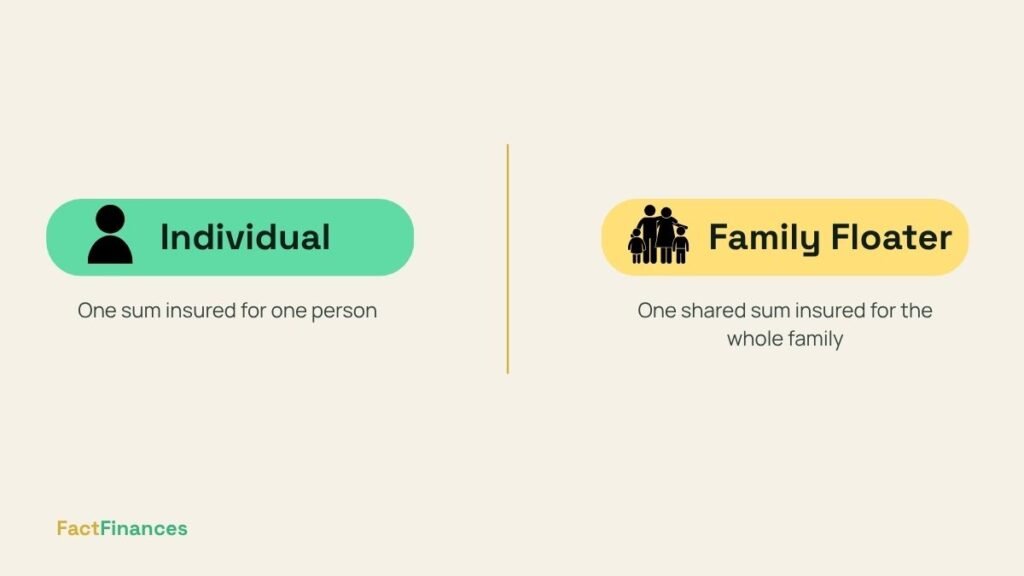
| Individual | A separate sum insured for one person | Singles; those wanting dedicated cover |
| Family floater | One shared sum insured across the family | Young families; cost-efficient cover |
| Top-up / super top-up | Extra cover above a deductible, cheaply | Boosting a base or employer policy |
| Critical illness | Lump sum on diagnosis of listed illnesses | Income protection during major illness |
| Senior citizen | Cover designed for older age groups | Elderly parents |
For most young families, a family floater paired with a super top-up is a common, cost-efficient combination — but the right structure depends on your household, which is exactly what how to choose health insurance works through.
Key Terms
Key terms you must understand
A handful of terms decide what your policy actually pays. Knowing these protects you from nasty surprises at claim time:
- Sum insured — the maximum the insurer will pay in a policy year. Too low a sum insured is the most common mistake; medical costs can easily exceed a small cover.
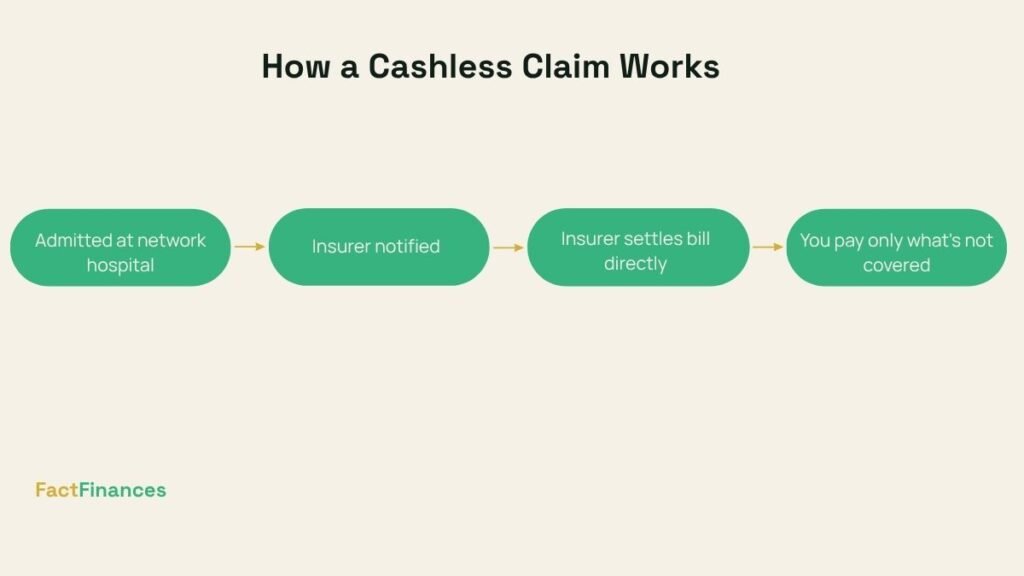
- Cashless vs reimbursement — at a network hospital, the insurer settles the bill directly (cashless); elsewhere, you pay first and claim it back (reimbursement).
- Network hospitals — the insurer’s tie-up hospitals where cashless treatment is available. A wide network near you matters.
- Waiting period — the time before certain conditions are covered, especially pre-existing diseases, which typically have a waiting period before claims are admissible.
- Co-pay — a share of each claim you agree to pay yourself; it lowers the premium but raises your out-of-pocket cost when you claim.
- No-claim bonus — an increase in your sum insured (or a discount) for every claim-free year, rewarding good years with more cover.
Other terms — room-rent limits, disease sub-limits, and restoration benefits — can quietly shrink what you actually receive, and they deserve close attention when comparing policies. We unpack each of those in the dedicated choosing guide.
Who Needs It
Who needs health insurance?
Unlike life insurance — which you only need if someone depends on your income — health insurance is close to universal. Anyone can fall ill or have an accident, and the bill doesn’t care how young or healthy you are. Two assumptions trip people up most often.
“I’m young and healthy, I’ll buy it later.” Buying young is actually the smart move: premiums are lower, you serve out waiting periods while you’re healthy, and you lock in cover before any condition appears that could be excluded later. Waiting until you need it is often waiting until it’s more expensive or harder to get.
“My employer already covers me.” Employer group cover is valuable but rarely enough — the sum insured is often modest, it usually doesn’t cover parents adequately, and it vanishes the day you change or lose the job, possibly when you need it most. A personal policy alongside employer cover closes that gap and stays with you for life.
The honest summary: almost every household needs its own health cover, sized to real medical costs rather than to the cheapest available premium. To see how a too-small sum insured leaves you exposed, our calculators include a health cover gap tool, and the Section 80D deduction can soften the premium cost at tax time.
Common Mistakes
Common mistakes to avoid
Most regret with health insurance traces back to a handful of avoidable errors. Knowing them upfront is half the battle:
- Buying too small a sum insured. The single most common mistake. A ₹3–5 lakh cover can be swallowed by one serious hospitalisation in a private hospital, leaving the rest to come from your savings.
- Choosing purely on the lowest premium. The cheapest policy often carries restrictive room-rent caps, sub-limits, or high co-pay that quietly reduce what you actually receive at claim time.
- Not disclosing your medical history honestly. Hiding a pre-existing condition to get a lower premium can lead to a rejected claim later — exactly when you need the cover most. Full disclosure protects you.
- Ignoring waiting periods. Pre-existing conditions and some specific treatments are only covered after a waiting period. Buying early means you serve out that clock while you’re healthy.
- Treating employer cover as your only policy. It’s a useful top-up, but relying on it alone leaves you exposed the day you change jobs or it proves too small.
Each of these comes down to the same principle: buy for the claim you hope you never make, not for the cheapest premium today. The choosing guide turns these into a concrete checklist.
Key takeaways
• Health insurance protects your savings from medical bills — a different job from life insurance, and an essential one given India’s high out-of-pocket costs.
• The risk is real: ~40 crore uninsured, ~73% health protection gap, and an average hospitalisation costing around ₹34,000 (more in private hospitals).
• Know the key terms — sum insured, cashless vs reimbursement, waiting period, co-pay, no-claim bonus — before you buy. A too-small sum insured is the most common mistake.
• Almost everyone needs it. Buy young (cheaper, fewer exclusions), and don’t rely on employer cover alone — it’s often too small and disappears when you leave the job.
Frequently asked questions
What does health insurance actually cover?
Broadly, it covers hospitalisation costs — room charges, treatment, surgery, and related expenses — up to your sum insured, along with certain pre- and post-hospitalisation costs. Exact coverage, exclusions, and limits vary by policy, which is why reading the policy document and comparing terms carefully matters before buying.
Do I need health insurance if I’m young and healthy?
Yes. Illness and accidents don’t check your age, and buying young means lower premiums and serving out waiting periods while you’re healthy. It also locks in cover before any condition appears that an insurer might later exclude. Waiting usually makes cover costlier or harder to get.
Is my employer’s health cover enough?
Usually not on its own. Employer cover tends to have a modest sum insured, may not cover your parents well, and ends when you leave or lose the job. A personal policy alongside it gives you adequate, portable cover that stays with you regardless of your employment.
What is the difference between cashless and reimbursement?
In a cashless claim at a network hospital, the insurer settles the eligible bill directly with the hospital, so you pay only what isn’t covered. In reimbursement, you pay the hospital yourself and then claim the amount back from the insurer with the bills. Cashless is more convenient, which is why a wide network of hospitals near you is worth checking.
How much health cover do I need?
Enough to absorb a serious hospitalisation in a private hospital in your city without touching your savings, accounting for rising medical costs. A small sum insured is the most common error. The right figure depends on your city, family size, and the hospitals you’d use — our health cover gap calculator and the choosing guide help you size it properly.
Keep Learning
Next steps: How to choose health insurance · Section 80D tax deduction · The real cost of being uninsured
The bigger picture: The complete guide to insurance in India
Disclaimer: FactFinances provides educational content only. This article is for general information and is not insurance, financial, or tax advice, and does not recommend any specific product or insurer. Insurance is the subject matter of solicitation. Coverage, terms, waiting periods, and exclusions vary by policy — read all policy documents carefully before buying. Health-cost figures are drawn from independent research including the 2025 NSS health survey and government National Health Accounts and may change over time. Consult a licensed advisor for your specific situation. ARN-144500. Regulatory information: IRDAI.